Artificial Rock vs. Natural Stone Waterfalls: Which Is Better for Kansas City Backyards?
Artificial Rock vs. Natural Stone Waterfalls: Which Is Better for Kansas City Backyards?
A custom waterfall can become the main attraction of a backyard, pool area, courtyard or commercial property. However, one of the first decisions is whether to build it with natural stone or a custom artificial-rock system.
Both options can produce a beautiful and durable water feature. The better choice depends on the desired appearance, available space, property access, budget and type of water flow you want to create.
Quick Answer
Natural stone is often an excellent choice for wide, low-profile waterfalls, garden streams and properties with enough access for excavation equipment and heavy boulders.
A molded-concrete artificial-rock waterfall may be the better choice when you want:
- A taller, more dramatic rock formation
- Greater control over the waterfall’s shape and color
- Less dependence on heavy natural boulders
- Installation in an area with limited equipment access
- A substantial waterfall without an existing pond
- A more predictable design and installation process
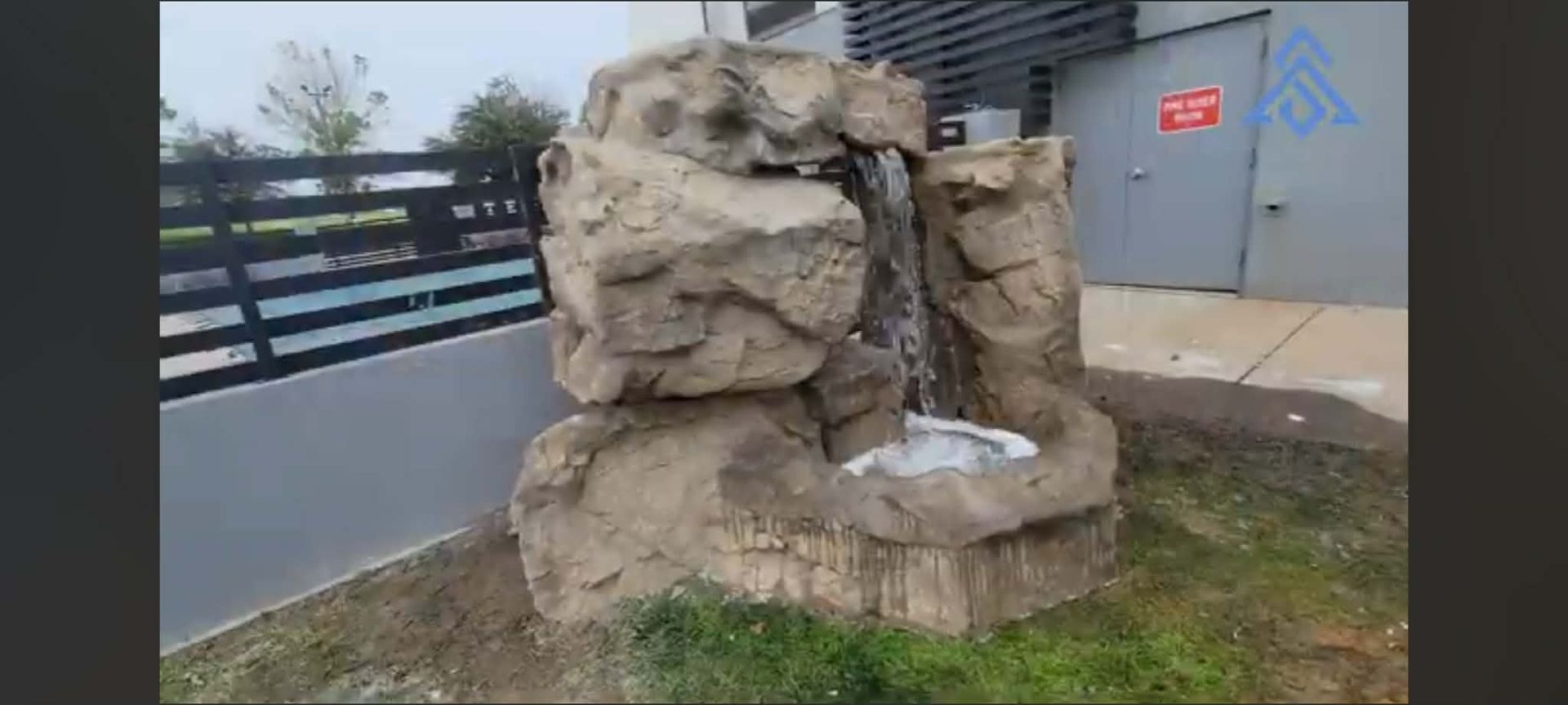
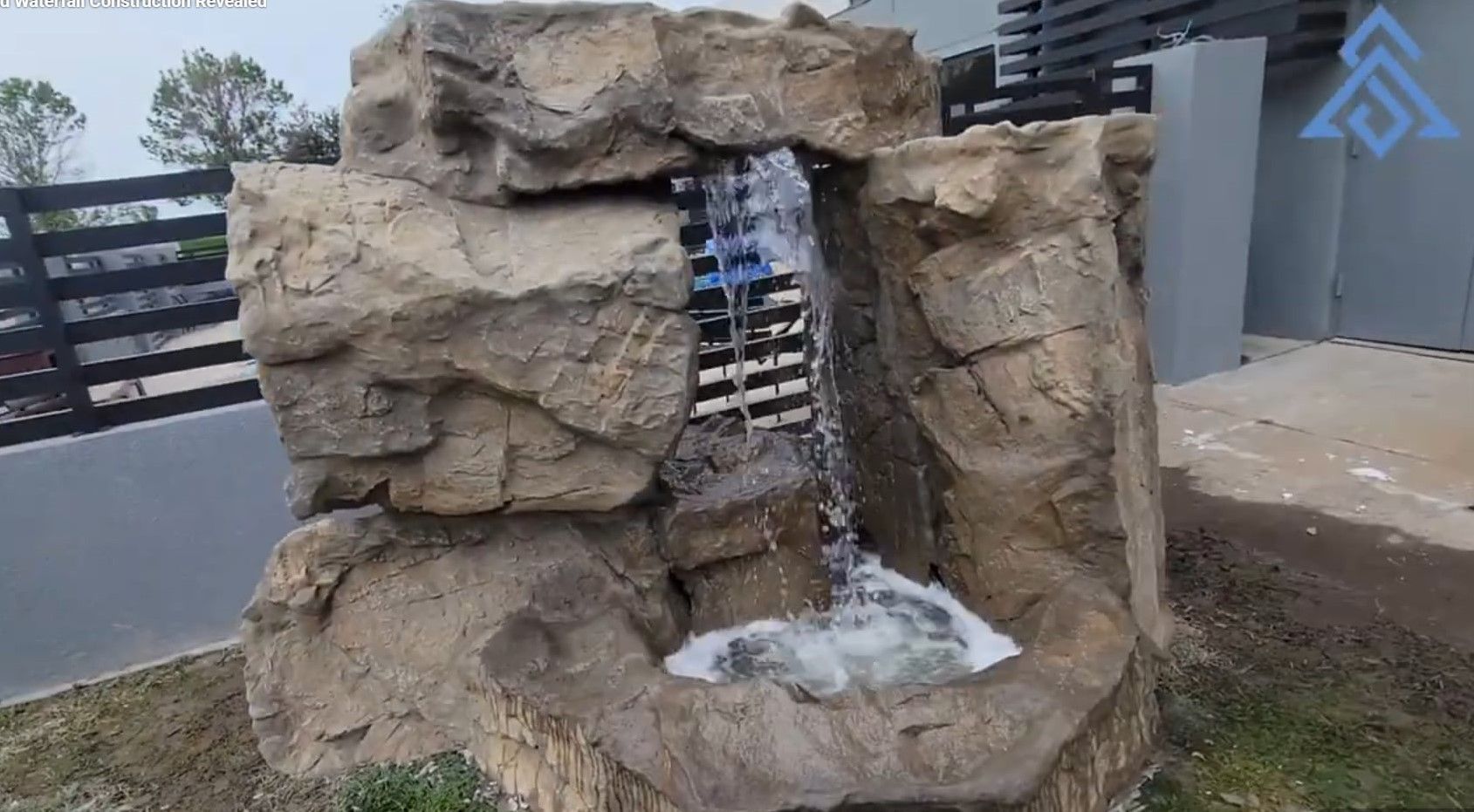
Scapesart manufactures and installs custom artificial-rock waterfalls using locally molded concrete panels. Our approximately 6×6-foot Signature Rock Waterfall starts at $7,500 installed for a site-ready property in the Kansas City metro.
What Is an Artificial-Rock Waterfall?
The term “artificial rock” can describe many different products, including lightweight fiberglass shells, foam-based decorations, GFRC panels and hand-sculpted concrete.
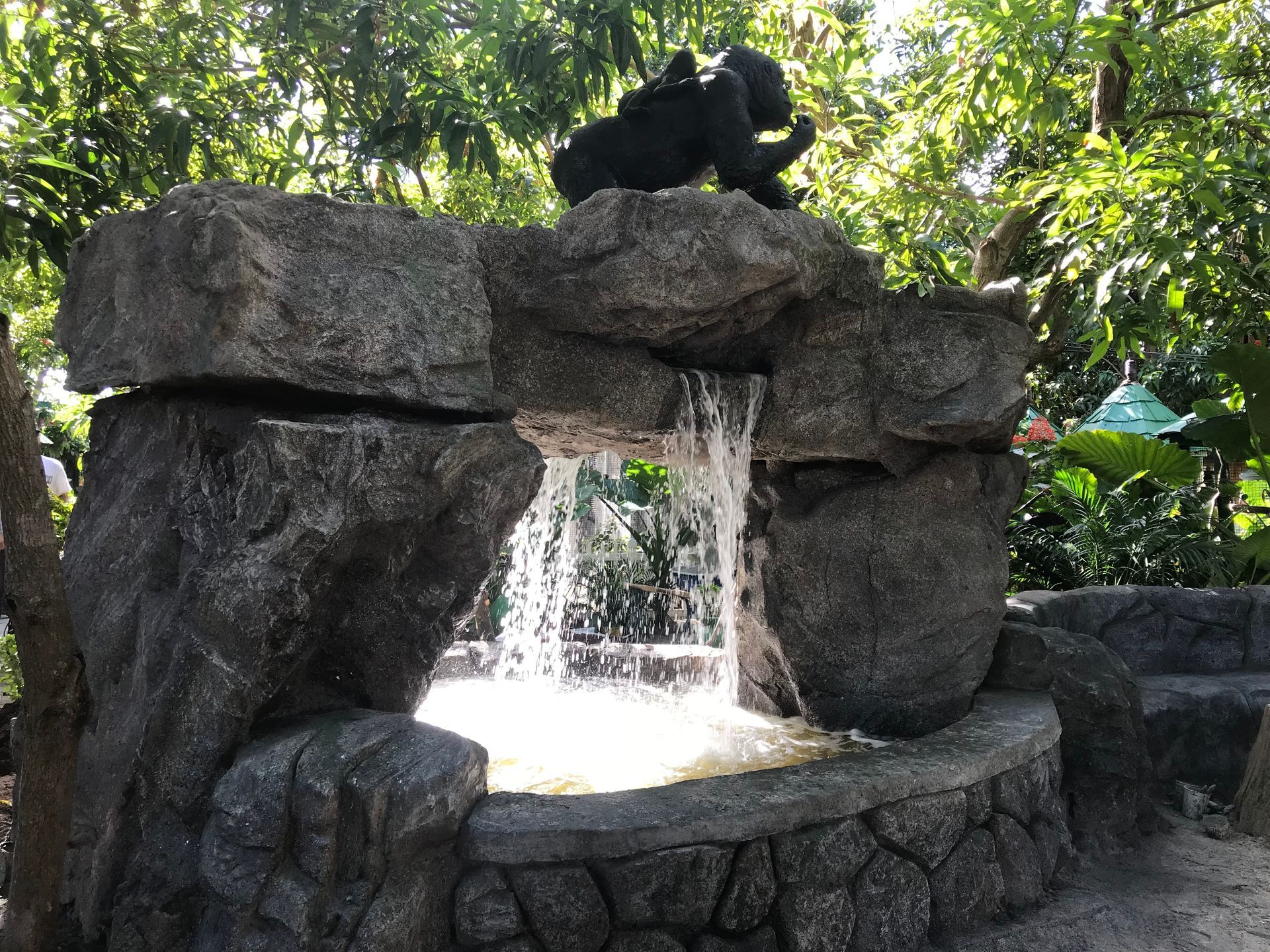
Scapesart’s system uses individually molded concrete rock panels. The panels reproduce the texture and irregular shapes found in natural rock and are arranged to create a custom formation rather than a single prefabricated fountain.
The completed waterfall includes:
- Approximately 15–20 molded concrete rock panels
- A liner-backed concrete collection basin
- A recirculating pump
- Standard PVC plumbing
- Custom panel arrangement
- Hand-applied coloring and rock detailing
- Water-flow testing and final adjustment
Because the panels are arranged for each property, the waterfall does not have to look like a fixed catalog product. Its height, shape, viewing angle and water path can be adapted to the available space.
No existing pond is required. The integrated basin collects and recirculates the water through the waterfall.
Learn more about how Scapesart builds a 6×6 artificial-rock waterfall.
What Is a Natural-Stone Waterfall?
A natural-stone waterfall is built from real boulders, fieldstone, ledgestone or other quarried materials. The stones are positioned around a liner, basin or pond, with plumbing installed underneath or behind the rock.
Natural stone provides authentic color, texture and weathering because every surface was created by nature. It is especially effective for low, spreading waterfalls and streams designed to blend into a larger landscape.
However, large natural boulders can be extremely heavy. Depending on the design, installation may require:
- Skid-steer or excavator access
- Additional excavation
- A reinforced base
- Delivery and placement of heavy boulders
- More room for equipment operation
- Additional stone to conceal liners and plumbing
These requirements do not make natural stone a bad option. They simply mean the property must be suitable for the installation method.
Artificial Rock vs. Natural Stone: The Main Differences
1. Natural Appearance
Natural stone has one obvious advantage: it is real stone. Its color variation, mineral patterns and weathering are naturally authentic.
A professionally made artificial-rock waterfall can also look realistic, but the final appearance depends heavily on the quality of the molds, panel arrangement, coloring and installation. Repeated shapes, flat placement or uniform coloring can make a poorly designed artificial waterfall look manufactured.
Scapesart addresses this by combining multiple panel shapes, changing their depth and direction and applying the final color and details by hand. This provides more control over the finished formation while retaining the irregular appearance expected from natural rock.
Best choice for appearance
- Choose natural stone when the goal is a low, landscape-integrated stream or boulder arrangement.
- Consider artificial rock when the goal is a taller formation, stronger focal point or specific rock shape that would be difficult to create with available boulders.
2. Weight and Property Access
Weight is one of the most important differences.
A natural boulder large enough to create a dramatic six-foot formation may weigh thousands of pounds. Delivering and positioning multiple boulders can require machinery and a clear access route into the backyard.
Molded concrete panels are still substantial construction materials and must be handled correctly, but they weigh less than an equivalent formation made entirely from solid boulders. The panels can be transported and assembled individually rather than moving the entire rock mass at once.
This can make artificial rock especially useful for:
- Fenced backyards
- Courtyards
- Pool areas
- Properties with narrow side-yard access
- Locations close to a home or existing patio
- Projects where large equipment would cause significant landscape damage
Before recommending either system, Scapesart reviews the access path, grade, installation area and distance from the street or driveway.
3. Design Flexibility
Natural stone design is influenced by the boulders available from the supplier. A contractor can select and rotate the stone, but its basic dimensions and shape cannot be changed.
Artificial-rock panels offer more control over:
- Overall height and width
- Number of water drops
- Direction of water flow
- Rock ledges and overhangs
- Color and tonal variation
- Position of the waterfall in relation to a patio, pool or viewing area
- Future integration with landscape lighting or nearby hardscape
This does not mean every shape is practical. The design still needs a stable base, properly supported panels, dependable plumbing and a water path that returns water to the basin.
4. Installation Time and Disruption
Installation time varies widely for both systems.
A natural-stone waterfall may be completed quickly when the design is simple and the property has excellent machinery access. More complicated projects may require excavation, heavy stone placement and extensive landscape restoration.
A standard Scapesart 6×6 artificial-rock waterfall can typically be produced and assembled in approximately three to five working days after scheduling. Weather, curing requirements, access and customization can extend that timeline.
Because the formation is assembled from individual panels, there may be less dependence on large equipment than with a solid-boulder installation. Major grading, demolition, electrical work, difficult access and pool integration are evaluated separately.
5. Cost
Neither material is automatically less expensive in every situation.
The cost of a natural-stone waterfall depends on:
- Type and quantity of stone
- Delivery distance
- Equipment and operator time
- Excavation and base preparation
- Liner, pump and plumbing requirements
- Site access
- Landscape restoration
The cost of an artificial-rock waterfall depends on:
- Overall size and height
- Number of molded panels
- Basin size
- Pump capacity
- Number of cascades
- Coloring and detailing
- Site preparation and access
- Lighting or pool integration
A complete Scapesart 6×6 Signature Rock Waterfall starts at $7,500 installed for a site-ready Kansas City metro property. The final price can increase when the project requires difficult access, major excavation, demolition, electrical work, extensive customization or integration with an existing pool.
See the complete guide to 6×6 artificial-rock waterfall pricing in Kansas City.
6. Durability in Kansas City Weather
Kansas City weather exposes outdoor construction to heat, freezing temperatures, precipitation and repeated freeze-and-thaw cycles.
A properly installed natural-stone waterfall can last for many years. However, soil movement, an inadequate base, failed mortar, damaged liners or water trapped in plumbing can create future problems.
A properly constructed concrete-panel waterfall can also provide long-term performance, but it is not maintenance-free or immune to damage. The base, basin, seams, water path and plumbing must all be designed and installed correctly. Concrete surfaces may eventually require cleaning, minor repairs or color refreshing.
For either system, winter preparation is important. Pumps, exposed plumbing and areas where water may become trapped should be inspected before freezing weather.
Scapesart provides project-specific operating and winter-care recommendations after installation.
7. Maintenance and Repairs
Both natural and artificial waterfalls use pumps, plumbing and recirculating water. Both require basic maintenance.
Typical maintenance includes:
- Removing leaves and debris
- Maintaining the correct water level
- Inspecting the pump intake
- Watching for reduced water flow
- Cleaning algae or mineral deposits when necessary
- Checking for leaks
- Preparing the system for freezing weather
Natural stone can be difficult to match if a large stone must be replaced or repositioned. However, smaller natural stones are readily available, and their color does not depend on a surface treatment.
Artificial-rock panels can often be repaired, recolored or individually addressed without replacing an entire formation. The feasibility of a repair depends on the panel material, original construction method and location of the damage.
Not all artificial-rock systems are compatible. A contractor should inspect the existing construction before agreeing to repair or expand a waterfall built by another manufacturer.
When Natural Stone May Be the Better Choice
Natural stone may be the stronger option when:
- You want a wide, low waterfall or natural-looking stream
- The property has open equipment access
- The landscape already contains substantial natural stone
- You prefer the natural weathering of real boulders
- The design depends more on horizontal movement than vertical height
- Suitable local stone is readily available
The goal should not be to force artificial rock into every project. The material and construction method should support the intended design.
When Artificial Rock May Be the Better Choice
A molded-concrete artificial-rock system may be the stronger option when:
- You want a taller waterfall within a relatively compact footprint
- Large boulder access is difficult
- The waterfall needs to become a major visual focal point
- You want more control over color, shape and water flow
- The installation is close to an existing patio, pool or outdoor-living area
- You want a self-contained feature without constructing a large pond
- You prefer a repeatable starting package with custom finishing
Artificial rock can also be useful when the desired formation would be impractical to reproduce using solid boulders of comparable size.
Which Waterfall Is Right for Your Property?
There is no universal winner between artificial rock and natural stone.
Natural stone provides authentic material and works beautifully in open landscapes, garden streams and low-profile installations. Artificial rock provides greater control over height, shape, weight distribution and final appearance.
The best decision begins with the property—not the material.
Scapesart first reviews the project location, available space, access route and desired result. In many cases, initial photos provide enough information to recommend a direction before scheduling a site visit.
Request an Initial Waterfall Review
To receive an initial recommendation, text Scapesart the following:
- Property address or city
- One wide photo of the proposed location
- One photo showing the access route
- Approximate available width and depth
- Whether the waterfall will be self-contained or connected to a pool or pond
- A reference photo showing the style you prefer
Scapesart serves the Kansas City metro from Eudora, Kansas.
Text: 913-707-7725
Explore our custom artificial-rock waterfall service and discover whether a Scapesart Signature Rock Waterfall is the right fit for your property.